
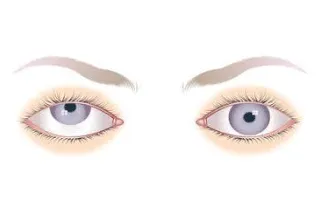


Strabismus (crossed eyes)
Strabismus is an eye disorder in which the eyes do not look at the same point in unison. One eye may look straight ahead, while the other eye may be turned inward, outward, up, or down. This condition may be permanent or only seen at certain times.
In children, strabismus is common, affecting about 4% of them. It can also appear at an older age and sometimes has a family history, although some sufferers do not.
The connection between vision and the brain
Normally, both eyes look at the same point and the brain combines the images received to create a three-dimensional image. However, in strabismus, due to the lack of coordination of the eyes, the brain receives two different images.
In children, the brain learns to ignore the image of the deviated eye and process only the image of the healthy eye; This causes decreased depth perception and loss of binocular vision.
In adults, because the brain cannot eliminate the image from one eye, the person develops double vision.
Amblyopia (lazy eye)
Proper eye coordination is essential for vision development during childhood. Strabismus can lead to amblyopia, a condition in which the brain gradually ignores the image from the weaker eye.
About half of children with strabismus also have a lazy eye. Treatment for amblyopia usually involves patching the stronger eye to strengthen the weaker eye.
If treatment is started in early childhood, there is a high chance of improvement; however, delaying treatment can lead to permanent vision loss in that eye.
Causes and symptoms of strabismus
Eye movements are controlled by six muscles that work together to move the eyes in different directions. Any disruption in this coordination can cause strabismus.
Some common causes include:
Brain problems such as cerebral palsy, mental retardation, hydrocephalus, or brain tumors
Reduced vision due to factors such as cataracts, refractive errors, or trauma to the eye
Symptoms of strabismus or cross-eyed eyes include:
- Eyes that deviate from their natural path
- Closing one eye in sunlight
- Tilting the head to see better
- Headaches or eye strain during prolonged use
- Complaints of double vision in adults
Diagnosis
Early diagnosis is very important. All children should be examined by a doctor or ophthalmologist during infancy or before they enter school, especially if there is a family history of strabismus or amblyopia. In infants, sometimes creases in the inner corners of the eyes or a wide nose can give the appearance of a cross-eyed eye, when this is only a false appearance. A definitive diagnosis can only be made by an ophthalmologist.
Strabismus Treatment
The goal of treatment is to straighten the eyes, maintain proper vision, and restore binocular vision.
Depending on the cause, treatment may include the following:
Prescription of glasses
Treatment of amblyopia
Vision exercises
Eye muscle surgery (if needed)
The sooner treatment begins, the better the results will be.
At Mehr Tabriz Eye Center, by utilizing the expertise of ophthalmologists and using modern technology, strabismus treatment is performed with the highest precision and the least complications so that the eyes of patients – especially children – return to a normal and healthy state.