


Glaucoma
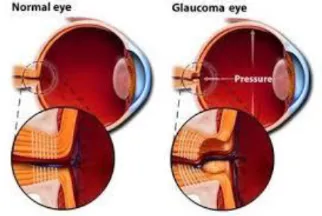
Glaucoma is a serious eye disease in which the pressure of the fluid inside the eye (the vitreous humor) becomes higher than normal. The main cause of this increase in pressure is a disruption in the outflow of this fluid from the tiny pores around the iris. In some people, these pores are congenitally narrow, which leads to increased intraocular pressure.
If left untreated, increased intraocular pressure can damage the optic nerve and ultimately reduce or lose vision. The extent of damage depends on the severity and duration of the high pressure.
With its highly specialized team, advanced operating room, and years of successful experience, this center has played an important role in the effective diagnosis and treatment of glaucoma.
Glaucoma Surgery Methods
1. Non-Penetrating Surgeries
Includes two main methods:
Deep Sclerectomy
In this method, a deep flap is created in the outer part of the white of the eye. A layer is then formed between the superficial and deep parts of the sclera, which acts as a reservoir for the drainage of aqueous humor.
Viscocanalostomy
In this procedure, a gel-like substance is injected into the Schlemm canal to widen it and allow fluid to drain more easily.
These two procedures are less invasive than traditional filtration surgeries, and the anterior chamber of the eye remains intact.
2. Trabeculotomy
In this procedure, part of the tissue in the drainage angle of the eye is removed to open up the path for the outflow of aqueous humor. This surgery is usually used for congenital glaucoma, especially when the cornea is cloudy. For children, this procedure or goniotomy is recommended.
3. Goniotomy
This surgery is performed using a special lens called a goniolens, which exposes the angle of the eye. In this procedure, a hole is created in the trabecular meshwork, which improves the drainage of aqueous humor. This procedure is suitable for congenital glaucoma with a transparent cornea.
4. Implantation of ocular shunts
Aqueous shunts are small tubes or valves that are connected to an oval or round reservoir. These shunts act as an artificial drainage system, directing aqueous humor to an area under the conjunctiva, where it is absorbed through blood vessels.